(Also called Acrylic Hard Court Surface, Cushion Acrylic, or Acrylic Tennis Court Finish)
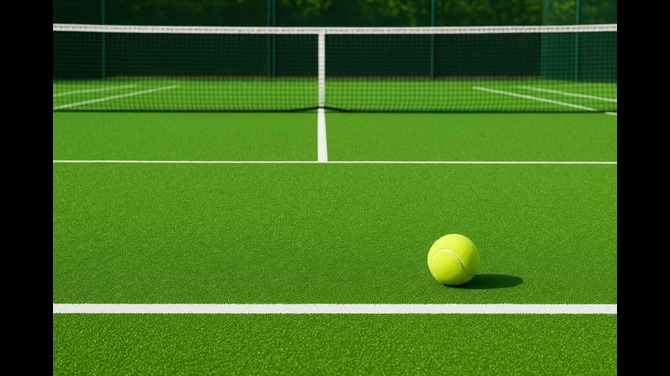
Synthetic acrylic flooring is one of the most widely used tennis court surfaces in the world — from professional facilities to community courts, schools, clubs, and high-performance training centers. It’s popular for its durability, consistent play, ease of maintenance, and versatility in different climates.
📌 What Is Synthetic Acrylic Tennis Court Flooring?
Synthetic acrylic tennis court flooring is a type of acrylic-based surface system applied over a strong, stable base — typically asphalt or concrete. It consists of multiple layers of acrylic polymers, color pigments, silica aggregates, and often a variety of cushioning materials.
When fully installed, the result is a smooth, vibrant, resin-bonded surface that offers a consistent ball bounce, excellent traction, and a relatively fast, predictable playing experience.
📊 Surface Classification
Synthetic acrylic courts are generally classified as medium-paced surfaces — falling between slow clay and fast grass. The International Tennis Federation (ITF) rates them as medium or medium-fast surfaces depending on the materials and texture depth.
This makes them ideal for all types of players — from baseline grinders to serve-and-volleyers.
🔍 Core Components of Acrylic Court Systems
A standard synthetic acrylic tennis surface consists of several key layers:
-
Base Slab
-
Engineered concrete or asphalt providing stability and drainage.
-
-
Crack Suppression or Cushion Pad (optional)
-
Layers of rubber or latex designed to improve shock absorption and reduce joint stress.
-
-
Acrylic Base Coats
-
Multiple resin-rich layers that bind to the substrate, level minor surface irregularities, and seal it.
-
-
Textured Color Coats
-
Pigmented acrylic layers with fine silica sand to create the desired texture for grip and traction.
-
-
Top Finish
-
Final pigmented layer that protects the surface color and resists ultraviolet (UV) fading and wear.
-
-
Line Markings
-
Acrylic paint carefully measured and applied to standards set by governing bodies.
-
🧠 How It Performs: Playability and Player Experience
🎾 Ball Behavior
-
Bounce height: High and consistent
-
Speed: Medium to medium-fast
-
Spin response: Predictable
👟 Traction & Movement
-
Excellent traction and slide control
-
Good footing for directional changes and lateral movements
-
Works well with modern tennis footwear
💪 Player Comfort
-
Cushioning materials (where used) reduce impact on joints
-
Better shock absorption than basic acrylic-only surfaces without padding
🌦 Weather Performance
-
All-weather playability
-
Drains quickly
-
UV stable
🔧 Advantages of Synthetic Acrylic Flooring
| Benefit | Explanation |
|---|---|
| Durability | Surface resists cracking, fading, and wear from heavy use. |
| Consistency | Uniform bounce and pace across the entire court. |
| Low Maintenance | Easier to maintain than clay or grass. |
| Weather Resistant | Handles sun, rain, and temperature changes well. |
| Color Retention | Pigmented layers maintain vibrant court colors for years. |
| Versatility | Can be customized for different speeds and textures. |
⚠️ Limitations and Considerations
-
Initial installation cost can be higher than basic surfaces like plain asphalt.
-
Surface repairs require trained professionals.
-
Hard impact: Without proper cushioning, repetitive play may put stress on ankles and knees.
-
Recoloring and resurfacing are needed approximately every 4–8 years depending on use and climate.
🏗 Installation: From Foundation to Finish
Step-by-Step Overview
-
Site Preparation
-
Excavation, grading, compaction, and drainage planning.
-
-
Base Construction
-
Concrete or asphalt poured and cured.
-
Designed with slight slope for drainage.
-
-
Surface Crack Repair
-
Fills and seals minor flaws in the base slab.
-
-
Optional Cushion Layers
-
Latex or rubber pads installed for impact absorption.
-
-
Acrylic Coating Application
-
Multiple base and texture coats applied by spray or squeegee.
-
Silica sand is incorporated for grip.
-
-
Final Finish and Line Painting
Quality Control Tests
-
Surface flatness
-
Drainage performance
-
Surface friction and slip resistance
-
Thickness and adhesion tests
Professional installers often follow ITF guidelines to ensure optimal performance.
🧼 Maintenance Best Practices
Although acrylic tennis court surfaces are easier to maintain than clay or grass, they still require regular care:
Daily / Weekly
✔ Sweep debris
✔ Wash surface with low-pressure water
✔ Check for ponding water
Monthly / Seasonal
✔ Remove mold, mildew, and organic growth
✔ Check surface texture condition
✔ Spot-repair minor cracks or wear
Long Term
✔ Recoat surface every 4–8 years
✔ Repaint lines as needed
✔ Address base cracks promptly
Proper maintenance increases longevity, playability, and safety.
🧾 Cost Factors
Cost varies based on:
-
Base type (asphalt or concrete)
-
Regional material costs
-
Thickness and type of acrylic system
-
Cushion or shock-absorbing layers
-
Site complexity (grading, drainage, accessibility)
-
Labor and contractor expertise
Typical Investment Breakdown
| Component | Relative Cost |
|---|---|
| Base Construction | Medium–High |
| Acrylic Materials | Medium |
| Labor / Installation | High |
| Long-Term Maintenance | Low–Medium |
Costs can vary significantly between countries and regions.
📈 Performance Ratings and Standards
Many governing bodies (e.g., ITF and national associations) evaluate acrylic surfaces using:
-
Surface Pace Rating
-
Friction and Slip Resistance
-
Ball Bounce Consistency
-
Shock Absorption Score
-
Durability Tests (UV, wear, moisture)
Installing a certified system ensures predictability and competitive suitability.
🧠 Choosing the Right Acrylic System
When selecting a synthetic acrylic surface, consider:
🎯 Purpose
-
Competitive play?
-
Recreational courts?
-
Schools and training centers?
🛡 Durability Needs
-
High-traffic courts require thicker, more resilient systems.
🦵 Player Comfort
-
Systems with built-in cushioning reduce joint stress.
🌎 Climate
-
Choose UV-resistant and moisture-tolerant systems for hot or rainy conditions.
💰 Budget
-
Balance upfront cost with long-term maintenance and performance.
📌 Final Thoughts
Synthetic acrylic tennis court flooring is proven, versatile, and performance-driven — making it one of the most recommended surface options worldwide. It delivers: