Introduction
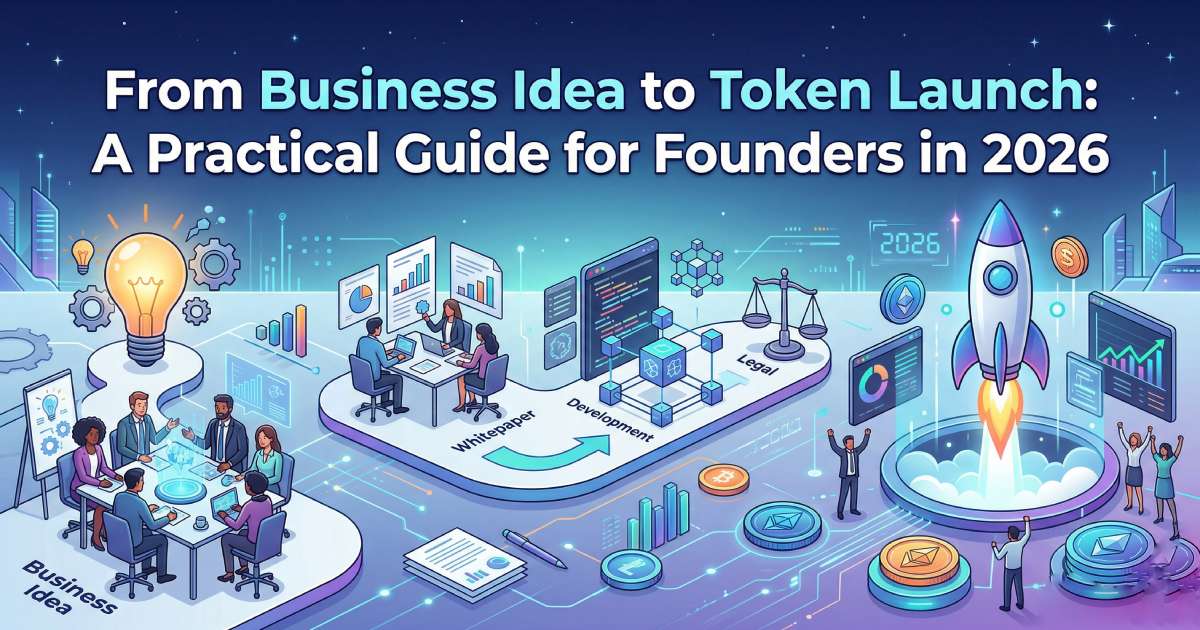
The path from a simple business idea to a successful token launch has become far more structured in 2026. What once looked like a quick fundraising shortcut now demands careful planning, regulatory awareness, and a clear understanding of how tokens actually function within a product. Founders entering the Web3 space are no longer competing on hype. They are competing on clarity, credibility, and execution.
At the same time, the opportunity has never been bigger. Tokenized ecosystems now support everything from gaming and DeFi to real-world assets and AI-driven platforms. Investors have matured, users expect utility from day one, and markets reward projects that show long-term thinking. This guide walks you through the real process founders follow today, from shaping an idea into a token-ready model to preparing for launch with confidence.
Understanding What Makes a Token Worth Launching
Before thinking about tokenomics or fundraising, the first question to answer is simple: does your idea actually need a token?
When a Token Makes Sense
A token should serve a clear role inside your product. Without that, it becomes an unnecessary layer that adds friction instead of value. In 2026, successful tokens usually support one or more of the following:
- Access to platform features or services
- Incentives for user participation or contribution
- Governance and decision-making
- Payments within a closed ecosystem
- Liquidity and value exchange
If your platform works just as well without a token, investors and users will quickly notice. The strongest projects today design the token as a core part of how the system functions, not as an add-on for fundraising.
Real-World Direction
Consider how modern Web3 platforms approach this. Gaming ecosystems reward activity with tokens that can be used across multiple experiences. DeFi platforms rely on tokens to balance liquidity and governance. RWA platforms use tokens to represent ownership and enable fractional access.
Each of these cases ties the token directly to usage. That alignment is what builds long-term demand.
Turning a Business Idea into a Tokenized Model
Once the need for a token is clear, the next step is translating your idea into a working economic structure.
Defining Your Core Use Case
Start by mapping out how users interact with your platform:
- What actions do users take regularly?
- Where does value exchange happen?
- What motivates users to stay active?
These answers shape how your token should function within the ecosystem. During crypto token development, the goal is to position the token at the center of these interactions so it becomes a natural part of the user journey, not something users are forced to adopt.
For example, a learning platform may reward completion with tokens, which can then be used to unlock premium content or participate in advanced programs. The token becomes part of the experience, not a separate layer.
Designing Utility Before Supply
Many founders still jump straight into supply numbers and pricing. That often leads to weak token models.
A better approach is to define utility first:
- Where is the token used?
- Why would someone hold it instead of selling?
- What creates continuous demand?
Only after answering these questions should you move into supply design. This ensures that tokenomics supports real usage rather than short-term speculation.
Building Strong Tokenomics That Hold Value
Tokenomics is where most projects either gain long-term stability or lose control early.
Allocation That Feels Fair and Sustainable
A well-balanced allocation prevents early dumping and builds trust with the community. Instead of overloading the team or private investors, modern projects distribute supply across multiple areas:
- Team and core contributors
- Community rewards and incentives
- Ecosystem growth and partnerships
- Liquidity and market support
What matters here is not just percentages, but perception. If users feel that insiders hold too much control, confidence drops quickly.
Managing Supply Flow Over Time
Supply entering the market too quickly creates immediate selling pressure. A structured release schedule helps avoid this.
Typical approaches include:
- Lock periods for early stakeholders
- Gradual unlocking over extended timelines
- Controlled emissions tied to platform activity
This allows demand to build before large amounts of supply become liquid.
Creating Demand Loops
Strong tokenomics is not just about limiting supply. It is about creating reasons for people to keep using and holding the token.
Examples of demand loops include:
- Staking mechanisms that offer meaningful benefits
- Access-based tiers that require token holding
- Fee discounts or exclusive features
When designed properly, these loops turn passive users into active participants.
Choosing the Right Blockchain Infrastructure
Your choice of blockchain directly affects cost, scalability, and user experience.
Matching the Chain to Your Use Case
Each network comes with trade-offs. Ethereum offers strong security and ecosystem depth but higher costs. BNB Chain provides faster transactions and lower fees. Solana focuses on speed and throughput. Polygon balances scalability with Ethereum compatibility.
The decision should depend on:
- Transaction frequency
- User onboarding experience
- Integration requirements
- Target audience
For example, high-frequency applications like gaming benefit from low fees and fast confirmation times. Institutional or high-value platforms may prioritize security and network reputation.
Multi-Chain Is Becoming Standard
In 2026, many projects are no longer limited to a single chain. Multi-chain strategies allow platforms to:
- Reach broader user bases
- Reduce dependency on one network
- Optimize performance for different use cases
This approach adds complexity but offers flexibility as the ecosystem grows.
Developing Smart Contracts and Platform Infrastructure
A token launch is not just about the token itself. It involves building the underlying system that supports it.
Core Components to Develop
At minimum, most projects need:
- Token smart contract
- Wallet integration
- User dashboard or interface
- Backend systems for tracking and rewards
For more advanced platforms, this may expand into staking modules, governance systems, and cross-chain functionality.
Security as a Priority
Smart contract vulnerabilities remain one of the biggest risks in Web3. A single flaw can lead to loss of funds and long-term damage to reputation.
Founders now invest heavily in:
- Code audits
- Stress testing
- Bug bounty programs
Security is not something to add later. It must be built into the development process from the beginning.
Crafting a Clear Whitepaper That Builds Trust
The whitepaper is still one of the most important assets for any token launch.
What Founders Must Include
A strong whitepaper should clearly explain:
- The problem being solved
- How the platform works
- The role of the token
- Tokenomics and distribution
- Roadmap and future plans
Clarity matters more than complexity. Overly technical or vague documents often lose reader interest.
Writing for Two Audiences
Your whitepaper needs to speak to both technical readers and general investors. This balance can be achieved by:
- Keeping explanations simple and structured
- Using visuals or examples where needed
- Avoiding unnecessary jargon
The goal is to make the project understandable without oversimplifying it.
Preparing for Fundraising and Token Sale Structure
Fundraising is where planning meets execution. A poorly structured sale can hurt long-term performance, even if it raises capital successfully.
Private vs Public Rounds
Most token launches today follow a phased approach:
- Private rounds for early supporters and strategic partners
- Public rounds for wider community participation
Each stage comes with different pricing, allocation, and expectations.
Example of a Structured Approach
A practical fundraising structure may look like this:
- Seed round at lower valuation with longer vesting
- Private sale with moderate pricing and partial unlocks
- Public sale with limited allocation and higher pricing
This creates a gradual price discovery process while managing supply release.
Avoiding Common Mistakes
Many founders make the same mistakes during fundraising:
- Overvaluing the token too early
- Allowing large allocations with short lock periods
- Ignoring long-term liquidity planning
A well-structured sale aligns incentives across all participants, from early investors to public buyers.
Building a Go-To-Market Strategy That Actually Drives Participation
By the time your token structure is ready, attention shifts to visibility. In 2026, launches no longer succeed just because they exist. They succeed because people understand them early, follow the journey, and feel involved before the token goes live.
Positioning Your Project Clearly
Most founders try to explain too much at once. That usually leads to confusion.
A stronger approach is to define three things clearly:
- What the product does in one simple line
- Who it is built for
- Why it matters right now
This becomes the base for all communication. Whether someone reads a tweet, a landing page, or a press release, the message should feel consistent and easy to grasp.
Creating Early Visibility Before the Sale
Momentum starts long before fundraising begins. Projects that wait until the sale phase to start marketing often struggle to gain traction.
Effective early-stage strategies include:
- Educational content that explains the problem and solution
- Behind-the-scenes updates on development progress
- Short-form content that simplifies key ideas
- Early access campaigns to build interest
This phase is not about selling. It is about building familiarity and trust.
Community Building That Feels Organic, Not Forced
A token launch without a strong community rarely sustains itself. At the same time, artificial growth tactics are easier to spot than ever.
What Real Community Growth Looks Like
In 2026, communities are built around participation, not just numbers. Active discussions, feedback loops, and shared progress matter more than inflated follower counts.
Founders who build strong communities usually:
- Stay visible and communicate regularly
- Answer questions without scripted responses
- Share real updates instead of constant promotion
The goal is to create a space where users feel like contributors, not just spectators.
Platforms That Still Work
While new platforms continue to emerge, a few channels remain central:
- X (Twitter) for updates, visibility, and conversation
- Telegram and Discord for direct engagement
- Medium or blogs for deeper explanations
Each platform serves a different purpose. Together, they create a layered communication approach.
Preparing for Token Launch and Distribution
As the launch date approaches, everything begins to converge. This is where execution matters more than planning.
Final Checks Before Launch
Before going live, founders should ensure:
- Smart contracts are audited and verified
- Token allocation and vesting schedules are transparent
- Wallet integrations are functioning smoothly
- Documentation is complete and accessible
Skipping these steps creates unnecessary risk at the most critical stage.
Launch Day Coordination
A successful launch depends on coordination across multiple elements:
- Website and dashboard readiness
- Community announcements and updates
- Marketing campaigns going live simultaneously
- Support channels active for user queries
Even small delays or confusion during launch can impact trust. Clear communication keeps the process smooth.
Exchange Listings and Liquidity Strategy
Once the token is live, the next phase begins immediately. Visibility and accessibility become the focus.
Understanding Listing Options
Projects typically approach listings in stages:
- Decentralized exchanges (DEXs) for immediate liquidity
- Centralized exchanges (CEXs) for broader reach and credibility
DEX listings allow faster entry, while CEX listings require more preparation but offer stronger exposure.
Building Healthy Liquidity
Liquidity plays a direct role in price stability and trading experience.
Strong liquidity strategies include:
- Allocating sufficient tokens for liquidity pools
- Pairing with stable assets like USDT or USDC
- Avoiding sudden liquidity removal
This helps reduce volatility and improves user confidence in the market.
Post-Launch Growth: Where Most Projects Struggle
Launching a token is not the finish line. It is the starting point of a longer journey.
Maintaining Momentum After Launch
Many projects see a drop in activity after the initial excitement fades. To avoid this, founders need to keep the ecosystem active.
This can be done through:
- Regular feature releases and updates
- Community-driven events and campaigns
- Expanding partnerships and integrations
Consistency matters more than intensity. Small, steady updates keep users engaged over time.
Turning Users Into Long-Term Participants
Short-term holders often exit quickly. Long-term participants stay when they see ongoing value.
This comes from:
- Continuous utility expansion
- Clear roadmap execution
- Transparent communication
The more users feel connected to the platform, the more likely they are to stay involved.
Navigating Compliance and Regulatory Expectations
Regulation has become a defining factor in token launches. Ignoring it is no longer an option.
What Founders Need to Consider
Different regions have different requirements, but common areas include:
- KYC and AML procedures for participants
- Restrictions on marketing in certain jurisdictions
- Clear distinction between utility and investment claims
Working with legal advisors early helps avoid complications later.
Building Trust Through Transparency
Compliance is not just about avoiding risk. It also builds credibility.
Projects that communicate clearly about:
- Token utility
- Distribution structure
- Legal positioning
tend to attract more serious participants and long-term support.
Long-Term Thinking: The Real Differentiator
The biggest shift in 2026 is how markets evaluate projects. Short-term hype no longer sustains value. Execution does.
What Sets Strong Projects Apart
Projects that perform well over time usually share a few traits:
- A clear and evolving product vision
- Real usage driving token demand
- Consistent communication with users
- Adaptability to market changes
These factors create resilience even during uncertain conditions.
Thinking Beyond the Launch
A token launch should be seen as part of a larger system, not a standalone event.
Founders who plan beyond launch focus on:
- Scaling their ecosystem
- Expanding use cases
- Building partnerships that add value
This approach turns a token into a long-term asset rather than a short-lived opportunity.
Conclusion
Turning a business idea into a successful token launch in 2026 requires more than technical execution. It demands clarity of purpose, structured planning, and the ability to build trust at every stage.
From defining whether a token is truly needed to designing tokenomics, choosing the right infrastructure, and preparing for launch, each step builds on the previous one. What separates successful projects is not just what they build, but how well they align their token with real usage and long-term value.
The process may feel complex, but it becomes manageable when approached step by step. Founders who stay focused on utility, transparency, and user experience are the ones who create ecosystems that last.
A well-planned token launch does more than raise funds. It lays the foundation for a system where users participate, contribute, and grow with the platform over time.