The past few years have seen an explosion of digital tokens across Web3 ecosystems. Startups, platforms, gaming networks, and decentralized finance protocols are all experimenting with token-driven models to raise capital, attract users, and build communities. For many founders entering the blockchain space in 2026, launching a token appears almost mandatory. Yet the reality is more nuanced.
A token can become the economic engine of a digital ecosystem. It can coordinate users, reward participation, enable governance, and power decentralized infrastructure. At the same time, many projects launch tokens prematurely or without a clear purpose, which often results in short-term speculation followed by declining user engagement.
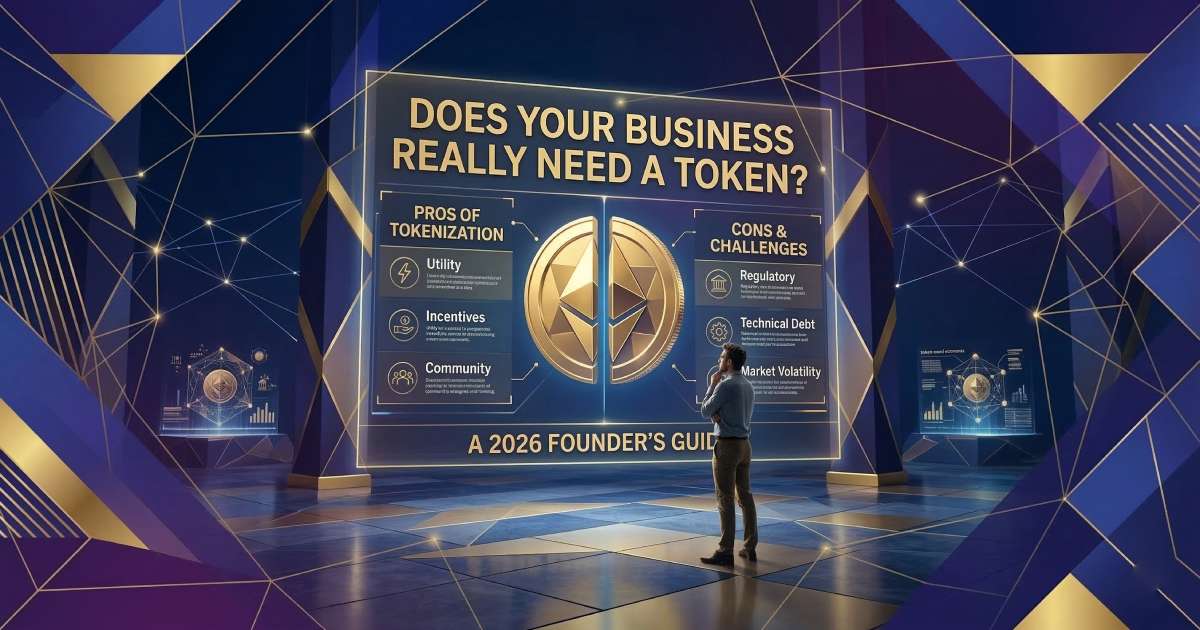
This raises a crucial question for founders: does your business actually need a token?
Understanding the answer requires more than enthusiasm for Web3 trends. It requires a clear evaluation of your product architecture, user incentives, regulatory environment, and long-term growth strategy. This guide explores when a token truly adds value to a business, when it does not, and how founders should approach token development in 2026.
The Rise of Tokens in Modern Digital Economies
Tokens have become a foundational mechanism in blockchain-based systems. In early cryptocurrency networks, tokens primarily functioned as digital money. Over time, their role expanded significantly.
Today, tokens can represent governance rights, utility within platforms, access to services, reward mechanisms, liquidity incentives, and even ownership of real-world assets. This evolution has allowed Web3 platforms to design entirely new economic systems.
Several industries illustrate how tokens reshape digital ecosystems:
- Decentralized finance protocols use tokens to coordinate liquidity providers and governance participants.
- Gaming platforms reward players through play-to-earn or skill-based token systems.
- Social networks experiment with creator tokens and community incentives.
- Infrastructure projects reward contributors who provide storage, bandwidth, or computing power.
For founders building Web3 products, token development services often serve as a mechanism to align user incentives with the growth of the network. Instead of a traditional platform extracting value from users, tokenized systems distribute value among participants who help the ecosystem grow.
However, the presence of successful token models does not mean every startup should adopt one. Many businesses still operate more effectively using traditional business models.
Why Founders Consider Launching Tokens
For entrepreneurs exploring blockchain-based ventures, tokens can appear attractive for several reasons. Some are strategic advantages, while others are simply perceived benefits influenced by market trends.
Access to Alternative Fundraising
Tokens provide startups with new fundraising avenues beyond venture capital or equity financing. Through mechanisms such as ICOs, IDOs, and token sales, projects can raise capital from global communities.
This approach democratizes participation in early-stage projects. Community members can become stakeholders in the ecosystem while the project receives funding to build infrastructure and expand its user base.
However, fundraising alone should never justify the existence of a token. Without a meaningful role in the platform, a token launched solely for fundraising often struggles to sustain long-term value.
Community Ownership and Participation
One of the most compelling features of tokenized systems is the ability to create community-driven platforms. Token holders can participate in governance decisions, influence protocol changes, and help shape the future direction of the ecosystem.
This shared ownership structure encourages deeper engagement. Instead of passive users, participants become stakeholders whose interests align with the platform’s growth.
Incentive Mechanisms for Network Growth
Tokens allow platforms to reward users for behaviors that contribute to the ecosystem. These incentives can accelerate early adoption and help bootstrap network effects.
For example, decentralized networks may reward contributors who provide computing resources, liquidity providers who support trading markets, or users who create valuable content.
In such cases, tokens function as economic incentives that replace centralized platform rewards.
Interoperability Within Blockchain Ecosystems
Another advantage of tokens is their ability to interact with decentralized financial infrastructure. Once a token exists on a blockchain network, it can integrate with wallets, exchanges, lending platforms, and decentralized applications.
This interoperability allows tokens to circulate across ecosystems, expanding their utility beyond the original platform.
While these advantages can be powerful, they only create sustainable value when the token has a clear and necessary role in the product architecture.
When a Business Truly Needs a Token
Not every Web3 startup benefits from launching a token. In many cases, a token becomes meaningful only when it solves a specific economic or coordination problem.
Coordinating Decentralized Networks
Tokens are particularly valuable in decentralized infrastructure networks. Systems such as distributed storage, computing platforms, and data networks rely on independent participants who contribute resources.
A token provides a mechanism to reward these contributors automatically through smart contracts. Without such incentives, participants would have little motivation to supply resources to the network.
In this context, the token acts as the economic glue that holds the decentralized system together.
Creating On-Chain Marketplaces
Tokens are also useful in platforms that operate as on-chain marketplaces. These ecosystems involve buyers, sellers, creators, and service providers interacting through smart contracts.
Tokens can facilitate payments, reduce friction in transactions, and enable programmable incentives. For example, marketplaces may reward users who bring new participants or generate valuable content.
Such tokenized economies can grow organically as participants benefit directly from the platform’s activity.
Enabling Decentralized Governance
Many blockchain platforms evolve through decentralized governance models. In these systems, token holders participate in voting mechanisms that determine protocol changes, upgrades, and treasury allocations.
Governance tokens allow decision-making authority to be distributed across the community rather than controlled by a centralized company.
For projects that genuinely aim to operate as decentralized networks, governance tokens can become an essential component.
Supporting Complex Incentive Structures
Certain platforms require sophisticated incentive systems to function effectively. For example, liquidity mining in DeFi protocols rewards users who supply capital to trading pools.
These mechanisms help bootstrap liquidity and attract participants in the early stages of a platform’s growth. Tokens enable these reward structures to operate automatically and transparently.
In situations where user behavior must be coordinated across thousands of participants, tokens can create an efficient incentive layer.
When a Token Might Be Unnecessary
While tokens can offer powerful advantages, many businesses adopt them without genuine necessity. In these cases, the token often introduces complexity rather than value.
Products That Function Without Blockchain
If a product operates effectively with traditional technology, introducing a token rarely improves the user experience. Many Web2-style platforms can achieve their goals without decentralized infrastructure.
For example, SaaS platforms, marketplaces, and digital services often function more efficiently with conventional payment systems and centralized databases.
Adding a token to such products may create friction for users rather than improving the product.
Lack of Genuine Utility
A token must serve a meaningful role within the ecosystem. If removing the token from the platform does not affect how the product works, its existence becomes questionable.
Many projects create tokens primarily to generate hype or attract speculative traders. Over time, such tokens struggle to maintain relevance once initial excitement fades.
Regulatory and Compliance Challenges
Launching a token introduces legal considerations that many founders underestimate. Regulatory frameworks around digital assets continue to evolve across jurisdictions.
Depending on how the token is structured, it may be classified as a security, utility asset, or digital commodity. Each category involves different compliance requirements.
Startups that fail to account for these legal complexities often encounter regulatory challenges later in their development.
Economic Design Complexity
Designing a sustainable token economy requires careful planning. Token supply, distribution schedules, reward mechanisms, and governance structures all influence how the ecosystem evolves.
Poor tokenomics can result in inflation, market manipulation, or declining incentives for participants.
Founders must understand that token design is not simply a technical task. It requires economic modeling, behavioral analysis, and long-term strategic planning.
Questions Every Founder Should Ask Before Launching a Token
Before initiating a token development process, founders should critically evaluate whether the token serves a necessary role in the business model.
Several key questions can help guide this decision.
Does the Token Enable Something That Cannot Be Achieved Otherwise?
A token should unlock functionality that traditional systems cannot easily replicate. If the platform works equally well using conventional payment methods or centralized reward systems, the token may not be essential.
Will Users Actually Need the Token?
For a token to maintain long-term relevance, users must interact with it regularly. This interaction might include staking, governance participation, payments, or access to services.
If users rarely need to hold or use the token, its economic value may decline over time.
Does the Platform Require Decentralization?
Tokens often make sense in systems that aim to operate without centralized control. If the project intends to maintain a centralized business model, a token might not align with its structure.
Can the Token Economy Sustain Itself?
A healthy token economy must balance supply and demand. If new tokens are constantly distributed as rewards without meaningful demand drivers, the token may face persistent selling pressure.
Careful tokenomics design becomes critical for maintaining long-term ecosystem stability.
Designing a Token That Actually Supports the Business
Once founders determine that a token is genuinely necessary, the next challenge is designing an economic structure that supports the platform rather than undermines it. Many token launches fail not because the technology is flawed, but because the economic model behind the token was poorly planned.
A token economy must connect directly to the platform’s real activity. When users interact with the product, the token should play a natural role in that interaction. If the token exists only for speculation, it becomes detached from the underlying service.
Successful token ecosystems usually share several design principles.
Utility Must Be Embedded in the Product
A token should not feel like an external financial instrument attached to the platform. Instead, it should function as a core component of the product experience.
Users should encounter the token naturally while performing meaningful actions. For example, a decentralized storage platform might require tokens to pay for storage services. A gaming ecosystem may use tokens for in-game purchases, tournament rewards, or governance decisions.
The key principle is that the product should rely on the token rather than merely promoting it.
Demand Drivers Must Exist Inside the Platform
A sustainable token economy requires consistent demand. Without real demand, token prices often decline as reward distributions increase supply in the market.
Demand can come from several sources:
- Access to services or features within the platform
- Staking mechanisms that provide benefits or governance power
- Payments for transactions or network usage
- Participation in governance decisions
The stronger these demand drivers are, the more resilient the token economy becomes.
Token Supply Must Be Carefully Structured
Token supply plays a significant role in how markets perceive a project. If large amounts of tokens unlock too quickly, early investors may sell aggressively, creating downward pressure on the market.
Thoughtful tokenomics typically includes vesting schedules, ecosystem allocations, community rewards, and long-term treasury reserves. These elements help distribute tokens gradually while ensuring the ecosystem has resources for future development.
A balanced supply model encourages participation rather than short-term speculation.
Incentives Should Encourage Contribution
Tokens are often used to reward users who contribute value to a network. However, poorly designed incentives can create unintended consequences.
For instance, if rewards are too generous, participants may join only to collect tokens rather than support the ecosystem. This behavior can lead to temporary activity followed by rapid decline once rewards decrease.
Effective token incentives should encourage long-term engagement rather than short-term extraction.
Real-World Examples of Effective Token Models
Examining existing token ecosystems helps illustrate how tokens can support digital platforms when designed properly.
Decentralized Finance Protocols
DeFi platforms use tokens extensively to coordinate liquidity providers, traders, and governance participants.
Liquidity providers supply assets to trading pools, which allows decentralized exchanges to function without traditional order books. In return, participants receive tokens that represent both rewards and governance rights.
This system aligns incentives across multiple stakeholders. Traders receive access to liquidity, providers earn rewards, and token holders help guide the protocol’s future development.
Blockchain Infrastructure Networks
Infrastructure projects that rely on distributed resources also benefit from token economies. Storage networks, computing platforms, and bandwidth-sharing systems require participants to supply hardware or resources.
Tokens provide an automated payment mechanism for these contributors. Without such incentives, decentralized infrastructure networks would struggle to attract sufficient participants.
The token effectively acts as the payment layer that sustains the network.
Gaming and Virtual Economies
Blockchain gaming ecosystems have introduced tokenized economies where players earn rewards through gameplay and participation.
Tokens may represent in-game currency, governance rights, or access to special events and tournaments. When these tokens connect to real gameplay mechanics rather than external speculation, they become meaningful components of the gaming experience.
However, gaming ecosystems also demonstrate how fragile token economies can be when rewards outweigh real engagement.
Common Mistakes Founders Make When Launching Tokens
Even experienced entrepreneurs sometimes misunderstand the challenges involved in building a token ecosystem. Several mistakes appear repeatedly across failed projects.
Launching a Token Before the Product Exists
One of the most common problems is releasing a token before the platform itself is functional. In such situations, the token becomes disconnected from real usage.
When users cannot interact with a working product, speculation replaces genuine demand. Once market excitement fades, the ecosystem struggles to maintain momentum.
Launching a token after the product demonstrates real utility usually produces more sustainable growth.
Designing Tokenomics for Marketing Instead of Sustainability
Some projects design token distribution primarily to attract investors rather than support long-term ecosystem health.
Large allocations to early investors, short vesting schedules, and aggressive reward emissions can generate early interest. However, these structures often create selling pressure that weakens the token economy later.
Tokenomics should prioritize ecosystem stability over short-term promotional appeal.
Ignoring Regulatory Considerations
Regulatory frameworks surrounding digital assets continue to evolve globally. Projects that launch tokens without legal planning may encounter significant challenges.
Founders must evaluate how their tokens are classified under applicable laws. In some jurisdictions, tokens may be considered securities, which introduces additional compliance requirements.
Early legal guidance helps prevent complications that could affect the project’s future.
Overestimating Community Demand
Another common mistake involves assuming that a token automatically attracts a community. While tokens can encourage participation, community growth still depends on product value and meaningful engagement.
Successful ecosystems build communities around real use cases rather than purely financial incentives.
The Role of a Token Development Company
For many founders, creating a well-designed token ecosystem requires expertise across multiple disciplines. Technical architecture, economic modeling, legal considerations, and market strategy all influence the success of a token launch.
This is where an experienced token development company becomes valuable.
Professional development teams typically assist founders in several areas:
- Designing tokenomics models that balance supply, demand, and incentives
- Developing secure smart contracts for token issuance and governance
- Integrating tokens with wallets, exchanges, and decentralized applications
- Structuring fundraising mechanisms such as ICOs, IDOs, or token sales
- Planning regulatory strategies and compliance frameworks
Beyond technical development, experienced teams often help founders align the token economy with the broader business model.
The goal is not simply to launch a token but to create a system that supports long-term ecosystem growth.
How the Token Landscape Is Evolving in 2026
The token ecosystem in 2026 looks different from the early days of blockchain experimentation. Several trends are shaping how founders approach token launches today.
Greater Focus on Utility
Investors and users increasingly prioritize tokens that demonstrate clear utility within functioning platforms. Projects that rely purely on speculation struggle to maintain credibility.
Tokens that power real services, decentralized infrastructure, or digital economies are gaining more attention.
Integration With Real-World Assets
Tokenization of real-world assets has expanded significantly. Real estate, commodities, financial instruments, and other assets are increasingly represented through blockchain tokens.
These developments connect token economies to traditional financial systems and introduce new regulatory considerations.
Improved Regulatory Clarity
Many jurisdictions have introduced clearer guidelines for digital asset projects. While regulatory frameworks still vary globally, founders now have better visibility into compliance requirements.
Projects that design token structures with regulatory awareness from the beginning are better positioned for long-term success.
More Mature Token Economies
Early token ecosystems often relied heavily on aggressive reward systems. Today’s projects increasingly focus on sustainable economic design.
Tokens are being integrated more thoughtfully into products rather than treated as standalone financial instruments.
Conclusion: When a Token Truly Makes Sense
Tokens can transform how digital platforms operate. They enable decentralized governance, reward participation, and create new economic models that align users with network growth. In the right context, a token becomes the foundation of an ecosystem rather than an optional feature.
However, not every business requires a token. Many startups adopt tokenization simply because it appears fashionable within the blockchain industry. When the token lacks genuine utility, it often becomes a liability rather than an advantage.
Founders should approach token development with careful evaluation. A token makes sense when it coordinates decentralized networks, powers on-chain marketplaces, enables governance systems, or supports complex incentive structures that traditional models cannot easily replicate.
If the product works just as well without a token, launching one may only introduce unnecessary complexity.
In 2026, the most successful Web3 businesses are not those that launch tokens the fastest. They are the ones that design token economies thoughtfully, ensuring that the token strengthens the product, supports the community, and contributes to sustainable ecosystem growth.
For founders entering the blockchain space, the real question is not whether you can launch a token. It is whether your platform truly needs one.