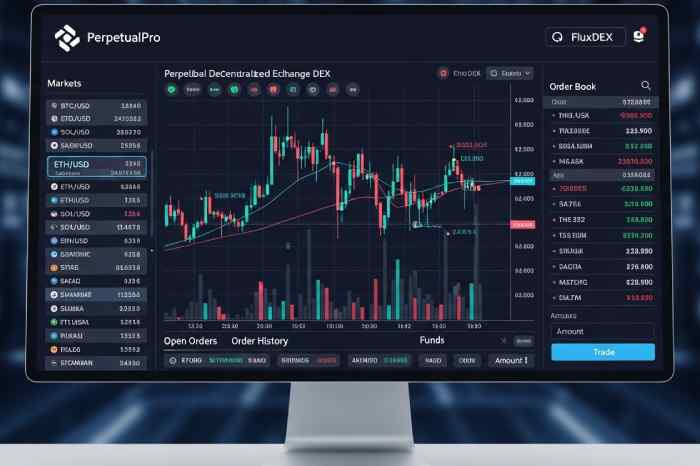
The decentralized finance (DeFi) sector has evolved at a remarkable pace, with derivatives trading—particularly perpetual futures—emerging as one of its most dominant segments. Platforms enabling perpetual contracts now account for a significant share of on-chain trading volume, driven by traders seeking leverage, flexibility, and continuous market access. Unlike traditional financial systems, DeFi removes intermediaries, allowing users to trade directly through smart contracts. However, this rapid growth has intensified competition among startups and enterprises aiming to launch their own decentralized exchanges (DEXs). The primary challenge lies in balancing speed, development cost, and technical sophistication. Building a perpetual DEX from scratch demands months of engineering, rigorous smart contract audits, and substantial capital investment. In such a fast-moving market, delays can result in missed opportunities and lost market share. This is where white label perpetual DEX solutions emerge as a strategic advantage. By offering pre-built, customizable infrastructure, they enable businesses to bypass lengthy development cycles and enter the market quickly with reduced financial risk.
Understanding White Label Perpetual DEX Platforms
A white label solution in the crypto space refers to a ready-made platform developed by one company and rebranded by another for commercial use. Much like a generic product that can be packaged under different brand names, these solutions allow businesses to launch fully functional exchanges without building the underlying technology from the ground up. In the context of perpetual DEXs, this includes core components such as trading engines, liquidity integrations, and smart contract frameworks. What makes perpetual DEXs particularly unique is their support for perpetual futures—contracts that do not expire, unlike traditional derivatives. Traders can hold positions indefinitely, using leverage to amplify gains, while mechanisms like funding rates keep prices aligned with the underlying asset. Margin systems and automated liquidations further ensure market stability. These features, combined with high liquidity and 24/7 trading, explain why perpetual contracts have become the preferred choice for modern crypto traders.
The True Cost of Building a Perpetual DEX from Scratch
Development Expenses Breakdown
Developing a perpetual decentralized exchange from the ground up is a capital-intensive and technically demanding endeavor that often exceeds initial expectations. Blockchain engineering alone requires specialized expertise to design secure, scalable smart contracts capable of handling complex trading logic. These contracts must then undergo rigorous third-party audits, which can cost tens of thousands of dollars but are essential to prevent exploits. On top of this, businesses must invest heavily in backend infrastructure, including high-performance trading engines, APIs, and data indexing systems, as well as frontend UI/UX development to ensure a seamless and intuitive user experience.
Hidden Operational Costs
Beyond development, hidden operational costs quickly accumulate. Continuous maintenance and upgrades are necessary to keep the platform competitive and secure in a rapidly evolving ecosystem. Legal and compliance requirements—especially in jurisdictions tightening crypto regulations—add another layer of financial burden. Liquidity sourcing is also a critical challenge; without sufficient market depth, a DEX struggles to attract traders, often requiring partnerships with liquidity providers. Additionally, round-the-clock security monitoring and incident response systems are essential to safeguard user funds and maintain platform credibility.
Time Investment and Opportunity Cost
Time is another major cost factor. Building a fully functional perpetual DEX typically takes anywhere from 6 to 18 months. In a market defined by rapid innovation, such delays can result in missed opportunities, allowing competitors to capture user attention and liquidity first. The longer the development cycle, the greater the risk of entering an already saturated or evolved market landscape.
How White Label Platforms Dramatically Reduce Development Costs
Eliminating Ground-Up Development
White label perpetual DEX platforms offer a compelling alternative by eliminating the need for ground-up development. Instead of building every component from scratch, businesses can leverage pre-built infrastructure that has already been tested and optimized. This significantly reduces both initial investment and technical complexity, allowing teams to focus on branding, marketing, and user acquisition rather than engineering challenges.
Shared Technology Ecosystem
Another key advantage lies in access to a shared technology ecosystem. White label providers typically offer proven frameworks, modular features, and integrated tools that have been refined across multiple deployments. This reduces reliance on large in-house development teams and minimizes the risk of costly errors or delays.
Lower Security and Audit Expenses
Security expenses are also notably lower, as many white label solutions come with pre-audited smart contracts. This reduces vulnerability risks, minimizes the need for repeated audits, and helps businesses launch with greater confidence in their platform’s safety.
Predictable Pricing Models
Finally, predictable pricing models provide financial clarity. Instead of managing fluctuating development costs, businesses can operate with fixed licensing or subscription fees. This makes budgeting more efficient and accessible, particularly for startups and enterprises looking to enter the DeFi space quickly without overextending resources.
Speed to Market: Launch in Weeks, Not Months
Ready-to-Deploy Architecture
One of the most significant advantages of white label perpetual DEX platforms is their ready-to-deploy architecture. Businesses gain immediate access to a fully functional trading environment without the need to build core systems from scratch. This dramatically shortens the launch cycle, allowing companies to move from concept to execution in a matter of weeks rather than months. With minimal setup and configuration requirements, even teams with limited technical expertise can initiate deployment quickly, focusing their efforts on market entry strategies instead of backend development.
Faster Integration of Core Features
White label solutions come equipped with essential trading functionalities that are already integrated or easily configurable. Features such as wallet connectivity, liquidity pools, and multiple trading pairs are built into the system, eliminating the need for complex integrations. Additionally, robust APIs enable seamless connectivity with external services, making it easier to expand platform capabilities without delaying the launch timeline. This plug-and-play approach ensures that businesses can deliver a comprehensive trading experience from day one.
Streamlined Testing and QA
Testing and quality assurance are often among the most time-consuming phases of software development. However, white label platforms significantly reduce this burden by offering pre-tested systems that have already undergone multiple deployment cycles. This minimizes debugging efforts and lowers the risk of critical errors during launch. As a result, businesses can achieve faster go-live readiness while maintaining a high level of reliability and performance.
First-Mover Advantage in Niche Markets
In the fast-paced crypto landscape, timing can determine success. White label platforms enable businesses to capitalize on first-mover advantages by entering niche markets early. Whether targeting emerging blockchain ecosystems or newly trending tokens, companies can respond swiftly to market shifts. Early entry not only helps capture initial user interest but also establishes brand authority before competitors can react.
Customization Without Complexity
Branding and User Experience Personalization
Contrary to common misconceptions, white label solutions do not limit creativity or differentiation. Businesses can fully customize the platform’s branding, including themes, logos, and overall user experience. This ensures that the exchange reflects the company’s identity while still leveraging a pre-built infrastructure. A well-designed interface tailored to target users can significantly enhance engagement and retention.
Modular Feature Enhancements
Another major benefit is the ability to scale features modularly. Businesses can start with core functionalities and gradually introduce advanced features such as staking, yield farming, or analytics dashboards. This flexible approach allows companies to align platform development with business growth, avoiding unnecessary upfront complexity while still planning for future expansion.
Multi-Chain and Cross-Chain Capabilities
Modern white label platforms increasingly support multi-chain and cross-chain functionalities, enabling businesses to operate across multiple blockchain networks. This not only broadens the platform’s reach but also enhances user accessibility by supporting a wider range of assets. By adopting a multi-chain approach, companies can future-proof their platforms and remain competitive in an ecosystem that is rapidly moving toward interoperability.
Built-In Liquidity and Market Readiness
Liquidity Aggregation Solutions
Liquidity is the lifeblood of any trading platform, and white label perpetual DEX solutions address this critical requirement from the outset. By integrating with external liquidity providers and aggregators, these platforms ensure that trading activity begins with sufficient depth and volume. This eliminates one of the biggest barriers for new exchanges—bootstrapping liquidity—and allows users to execute trades efficiently from day one. A well-integrated liquidity framework not only enhances user confidence but also creates a more competitive trading environment.
Market Depth and Slippage Reduction
In perpetual trading, liquidity directly impacts price stability and execution quality. Low liquidity often leads to high slippage, discouraging traders from using the platform. White label solutions mitigate this risk by connecting to multiple liquidity sources, ensuring tighter spreads and deeper order books. This is particularly valuable in the early stages of a platform’s lifecycle, where organic liquidity is still developing. By solving these initial challenges, businesses can deliver a professional-grade trading experience that rivals established exchanges.
Institutional-Grade Trading Features
To attract serious traders, a platform must offer advanced tools and robust trading mechanics. White label perpetual DEX platforms typically include institutional-grade features such as multiple order types, customizable leverage options, and sophisticated risk management systems. Built-in risk engines and automated liquidation mechanisms help maintain market integrity while protecting both traders and the platform from excessive losses. These features elevate the platform’s credibility and appeal to a broader spectrum of users, including high-frequency and professional traders.
Security, Compliance, and Reliability Advantages
Enterprise-Level Security Protocols
Security remains a top priority in the DeFi ecosystem, where vulnerabilities can lead to significant financial losses. White label platforms are designed with enterprise-level security protocols, including multi-layer encryption, secure wallet integrations, and advanced authentication mechanisms. Additionally, protection against distributed denial-of-service (DDoS) attacks and infrastructure-level threats ensures uninterrupted platform performance. This comprehensive security framework helps build trust among users and safeguards the platform’s reputation.
Regulatory Considerations Made Easier
Navigating the evolving regulatory landscape can be complex, especially for new entrants. Many white label solutions incorporate compliance-friendly features that simplify this process. Options for Know Your Customer (KYC) and Anti-Money Laundering (AML) integrations allow businesses to align with regional regulations more efficiently. By embedding these capabilities into the platform, companies can reduce legal risks while maintaining operational flexibility across different jurisdictions.
Continuous Updates and Technical Support
Another key advantage is ongoing technical support and system maintenance provided by the vendor. White label providers typically handle updates, security patches, and performance enhancements, ensuring that the platform remains up to date with industry standards. круглосуточный monitoring and dedicated support teams further enhance reliability, allowing businesses to focus on growth and user acquisition rather than technical troubleshooting.
Scalability for Long-Term Growth
Handling High Trading Volumes
As user adoption grows, the ability to handle high trading volumes becomes critical. White label perpetual DEX platforms are built on scalable infrastructure designed to maintain performance and uptime under heavy loads. This ensures a smooth trading experience even during peak market activity, preventing downtime that could result in lost revenue and user dissatisfaction.
Adding New Markets and Features
Scalability also extends to product expansion. Businesses can easily introduce new trading pairs, derivatives, and financial instruments without overhauling the existing system. This flexibility enables continuous innovation and allows platforms to adapt to evolving market demands, keeping them competitive over time.
Supporting Global User Bases
To succeed in the global crypto market, platforms must cater to diverse audiences. White label solutions often include multi-language interfaces and multi-currency support, making it easier to onboard users from different regions. Combined with the ability to comply with regional regulations, this positions businesses for seamless international expansion and long-term growth.
Ideal Use Cases for White Label Perpetual DEX Solutions
Crypto Startups Seeking Fast Entry
For early-stage crypto startups, speed and capital efficiency are critical. White label perpetual DEX solutions enable these businesses to launch minimum viable products (MVPs) in a matter of weeks, allowing them to validate ideas and test product-market fit without committing extensive resources. Instead of investing heavily in infrastructure, startups can focus on user acquisition, community building, and refining their value proposition. This agile approach significantly reduces the risk of failure while accelerating learning cycles in a competitive market.
Established Exchanges Expanding to DeFi
Centralized exchanges looking to expand into decentralized finance can leverage white label solutions to quickly integrate DeFi capabilities into their existing ecosystem. By adding perpetual DEX functionality, these platforms can diversify their revenue streams and attract a broader audience interested in non-custodial trading. This hybrid approach allows established players to remain competitive while meeting the growing demand for decentralized trading options.
Fintech Companies Entering Web3
For fintech firms transitioning into Web3, the technical complexity of blockchain development can be a major barrier. White label platforms provide a simplified entry point by offering ready-made infrastructure that integrates seamlessly with existing systems. This allows companies to leverage their current user base and brand reputation while minimizing the challenges associated with building blockchain-native solutions from scratch.
Entrepreneurs Building Niche Trading Platforms
Entrepreneurs targeting specific communities or niche markets can use white label DEX solutions to create highly customized platforms tailored to unique user needs. Whether focusing on a particular token ecosystem, geographic region, or trading strategy, these solutions enable rapid deployment of differentiated offerings. This targeted approach helps businesses stand out in an increasingly crowded market.
Comparing White Label vs Custom Development: A Strategic Decision
Cost Comparison
One of the most significant differences between white label and custom development lies in cost structure. Custom-built platforms require substantial upfront investment in development, infrastructure, and security, along with ongoing maintenance expenses. In contrast, white label solutions typically operate on fixed pricing models, offering a more predictable and cost-effective alternative, especially for businesses with limited budgets.
Time-to-Market Comparison
Time-to-market is often the deciding factor in the crypto industry. Custom development can take months or even years, delaying entry into a rapidly evolving market. White label platforms, on the other hand, enable businesses to launch within weeks, providing a critical advantage in capturing early users and responding to emerging trends.
Flexibility and Control Trade-offs
While custom development offers complete control over features and architecture, it comes with increased complexity and longer timelines. White label solutions strike a balance by providing a high degree of customization without the burden of building from scratch. Businesses must weigh the need for full control against the benefits of speed and operational efficiency.
Risk Assessment
Custom-built platforms carry significant technical risks, including potential security vulnerabilities, development delays, and scalability challenges. White label solutions mitigate many of these risks by offering pre-tested, audited systems. However, they introduce a degree of vendor dependency, making it important for businesses to choose reliable providers with strong support and long-term viability.
Conclusion
Adopting a White Label Perpetual Exchange Platform offers a powerful strategic advantage for businesses aiming to enter the fast-evolving DeFi derivatives market with minimal risk and maximum efficiency. By significantly reducing development costs, accelerating time-to-market, and providing access to pre-built, secure, and scalable infrastructure, these solutions eliminate many of the traditional barriers associated with launching a perpetual DEX. Whether for startups testing new ideas, established exchanges expanding into decentralized trading, or fintech firms entering Web3, white label platforms enable faster innovation and competitive positioning. Ultimately, in a market where speed, reliability, and adaptability define success, leveraging a white label approach allows businesses to focus on growth, user experience, and differentiation rather than technical complexities.