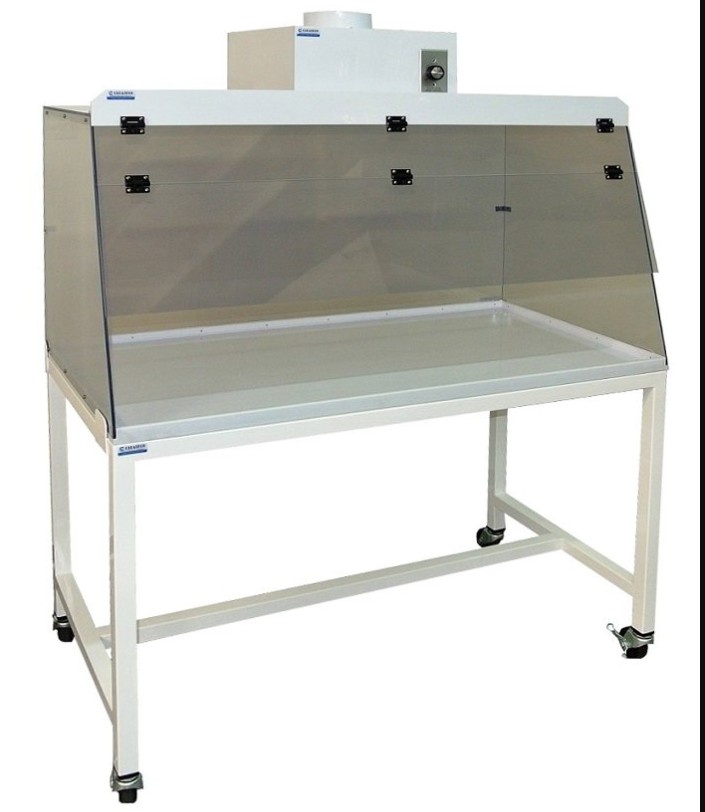
Calculating exhaust requirements for a ducted fume hood is essential for maintaining effective laboratory ventilation and protecting you from hazardous chemical vapors, fumes, and airborne contaminants. If you select an exhaust system with insufficient capacity, contaminants may escape into your workspace. An oversized or poorly balanced system can also increase energy consumption and disrupt laboratory airflow. By understanding sash dimensions, target face velocity, airflow volume, and duct resistance, you can determine the ventilation capacity your application requires.
1. Understand the Factors That Affect Exhaust Requirements
Before calculating airflow, identify the operating conditions of your laboratory fume hood. Exhaust requirements depend on several important factors:
Sash opening: The height and width of the open sash determine the exposed face area.
Face velocity: The average air speed entering the hood through its open face.
Chemical hazards: The type, quantity, and volatility of chemicals influence containment requirements.
Duct configuration: Duct length, diameter, bends, fittings, and other components affect airflow resistance.
Operating conditions: Equipment placement, heat generation, and laboratory cross-drafts can influence hood performance.
You should evaluate these factors together rather than selecting an exhaust fan based only on the hood’s physical dimensions.
2. Measure the Open Sash Area
The first step in calculating exhaust airflow is determining the hood’s open face area.
Measure the usable width and height of the sash opening. Multiply these dimensions to calculate the area.
Formula:
Face Area (ft²) = Opening Width (ft) × Opening Height (ft)
For example, assume your ducted fume hood has:
- Opening width: 4 feet
- Sash opening height: 2 feet
The calculation is:
4 × 2 = 8 ft²
Your hood therefore has an open face area of 8 square feet.
Remember that the actual operating sash position matters. If the sash height changes, the required airflow may also change.
3. Calculate the Required Exhaust Airflow in CFM
Once you know the open face area, calculate the approximate exhaust airflow using the target face velocity.
Formula:
Exhaust Airflow (CFM) = Face Area (ft²) × Face Velocity (FPM)
CFM means cubic feet per minute, while FPM means feet per minute.
For example, if your calculated face area is 8 square feet and your specified design face velocity is 100 FPM:
8 × 100 = 800 CFM
Your preliminary exhaust airflow requirement is 800 CFM.
This example demonstrates the calculation method, not a universal design requirement. The appropriate face velocity must be established through a documented risk assessment, applicable standards, manufacturer specifications, and verified containment testing. Higher face velocity does not automatically guarantee better protection.
4. Account for Different Sash Opening Positions
Your laboratory personnel may operate the hood at different sash heights throughout the day. Therefore, you should calculate airflow for the expected operating positions.
For example, consider a hood with a 4-foot opening width:
- At 1-foot sash height: 4 ft² face area.
- At 1.5-foot sash height: 6 ft² face area.
- At 2-foot sash height: 8 ft² face area.
At a hypothetical target face velocity of 100 FPM, the corresponding airflow values are 400, 600, and 800 CFM.
This comparison helps you understand why variable air volume (VAV) systems can be useful. A properly designed VAV system adjusts exhaust airflow as the sash moves while maintaining the required operating conditions.
5. Evaluate Duct Size and System Resistance
Calculating hood face airflow is only part of the process. You must also determine whether your exhaust ductwork can transport the required volume of air.
Evaluate:
- Duct diameter and cross-sectional area.
- Air velocity within the exhaust duct.
- Total duct length.
- Elbows, transitions, dampers, and fittings.
- Filter or scrubber pressure losses, where applicable.
- Exhaust stack and discharge configuration.
A basic duct airflow relationship is:
CFM = Duct Area (ft²) × Duct Velocity (FPM)
For a circular duct:
Duct Area = π × (Duct Diameter ÷ 2)²
Use consistent units when performing the calculation.
Your exhaust fan must deliver the required airflow at the total system static pressure, not simply achieve a particular airflow rating under unrestricted conditions.
6. Select the Appropriate Exhaust Fan Capacity
After calculating the required airflow and evaluating duct resistance, select an exhaust fan capable of delivering the design airflow at the calculated static pressure.
Consider fan performance curves, motor specifications, chemical compatibility, corrosion resistance, and operating conditions.
Avoid selecting a fan based only on its maximum advertised CFM. You need to verify its actual performance at the system’s operating pressure.
For reliable operation, coordinate fan selection with a qualified ventilation engineer and the fume hood manufacturer.
7. Verify Airflow and Containment Performance
Once installation is complete, verify that the system performs as designed.
Your commissioning process should include:
- Measuring face velocity across the hood opening.
- Checking airflow uniformity.
- Performing appropriate containment testing.
- Evaluating sash movement and alarm operation.
- Checking duct airflow and exhaust fan performance.
- Confirming that room supply air does not interfere with hood containment.
ASHRAE Standard 110 provides a recognized method for evaluating laboratory fume hood performance. You should also consider applicable laboratory ventilation guidance, including ANSI/ASSP Z9.5.
Schedule periodic inspections and performance checks to identify airflow problems before they compromise laboratory safety.
8. Choose a Ducted Fume Hood for Your Laboratory
Your exhaust calculations should guide equipment selection. Consider the chemicals you handle, required working dimensions, sash configuration, construction materials, and exhaust connection requirements.
Explore the available ducted fume hood solutions for laboratory chemical ventilation to identify equipment suitable for your application.
At CleaTech LLC, you can explore laboratory equipment and cleanroom solutions designed for different research, industrial, and laboratory environments.
If you need help evaluating hood configurations, dimensions, or application requirements, contact us today for ducted fume hood information and equipment guidance.
Conclusion
Calculating exhaust requirements for ducted fume hoods involves more than multiplying opening dimensions by face velocity. You must also evaluate sash positions, chemical hazards, duct resistance, exhaust fan performance, and containment testing. By combining accurate airflow calculations with professional system design and commissioning, you can establish a reliable laboratory ventilation solution that supports safer chemical handling and efficient operation.
Frequently Asked Questions
How do you calculate exhaust airflow for a ducted fume hood?
Multiply the open face area in square feet by the specified face velocity in feet per minute. The result gives the approximate exhaust airflow in CFM.
What does CFM mean in fume hood ventilation?
CFM stands for cubic feet per minute. It measures the volume of air exhausted through the hood and ventilation system every minute.
Does sash height affect ducted fume hood exhaust requirements?
Yes. Increasing the sash opening increases the exposed face area. A constant-volume system may require additional airflow, while a properly designed VAV system adjusts exhaust volume as the sash moves.
How do you determine the correct exhaust fan size?
Calculate the required airflow and determine the total system static pressure, including ductwork, fittings, and connected equipment. Select a fan using its performance curve at the required operating point.
Why is face velocity important for ducted fume hoods?
Face velocity describes the speed of air entering the hood opening. Maintaining an appropriate, uniform airflow helps support contaminant containment, but actual protection must be confirmed through performance testing.